This summer, roughly five million international visitors will travel to the United States, Canada, and Mexico for the 2026 FIFA World Cup. They will navigate new cities, new languages, and new transit systems. Most of them will also collide, sometimes painfully, with one of the most culturally specific social contracts in North America: the tipping system.
For fans arriving from Japan, Germany, South Korea, or Sweden, the experience can be genuinely disorienting. In many of those countries, tipping is either unnecessary, unusual, or actively considered rude. In Japan, offering extra money to a service worker can disrupt the philosophy of omotenashi, the cultural ideal of wholehearted, unconditional hospitality, suggesting that the server's baseline effort was somehow inadequate and needed a financial supplement. In contrast, a visitor to New York City who leaves nothing after a sit-down meal is not just being thrifty. They are, in the eyes of their server, violating a social norm so embedded it is structured into the wage system itself.
The 2026 World Cup is a useful lens because it makes this contrast visible at scale. But the underlying dynamic is not a tourist problem. It is a cultural intelligence problem, and it plays out in workplaces every day.
The Rules Are Not Universal, and Most People Do Not Know That
The tipping norms currently in place in the United States are among the most complex in the world. According to a 2023 Pew Research Center survey of nearly 12,000 American adults, 72% of U.S. adults say tipping is expected in more places today than it was five years ago, a phenomenon widely described as "tipflation." Even so, only about a third of Americans say it is extremely or very easy to know whether or how much to tip in any given situation. If the people who grew up inside this system find it confusing, the experience for someone arriving from a culture with entirely different norms is considerably more fraught.
For World Cup visitors, the financial arithmetic alone is striking. A decade ago, 15% was considered acceptable in a US restaurant but today, 18% is widely seen as the minimum, with many restaurants pushing diners towards 20% or more, on top of local sales taxes that can add another 8–9% in cities like New York. That means a meal advertised at $78 for two people could end up costing more than $100 once tax and tip are added.
Meanwhile, visitors from Japan, South Korea, and Scandinavia come from countries where tipping is unnecessary or even offensive. When a Japanese visitor instinctively leaves no tip, they are not being disrespectful. They are operating from an entirely coherent set of cultural values, in which fair wages are standard and leaving extra money implies the server was not adequately compensated by their employer. The behavior is identical. The meaning is completely different.
This is precisely the kind of gap that cultural intelligence exists to close.
The Underlying Pattern: Implicit Rules That Nobody Announces
Tipping culture is a useful illustration of a much broader dynamic in cross-cultural communication: the existence of implicit rules. These are the behavioral expectations that feel so obvious to insiders that no one thinks to state them, and so invisible to outsiders that no one knows to ask.
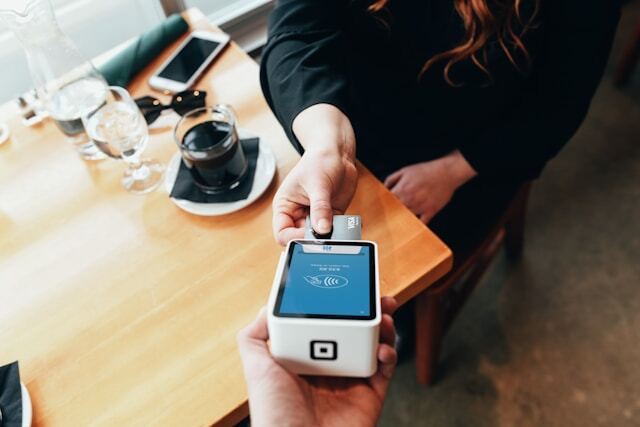
In Worldprism terms, this maps directly to the Explicit vs. Implicit Communication dimension. Some cultures operate with high-context communication norms, where meaning is embedded in context, relationship, and shared understanding. Others rely on explicit, stated norms where expectations are articulated directly. The US tipping system is, paradoxically, an implicit norm embedded in an explicit transaction. The screen may show suggested amounts, but the social obligation behind them, the structural reality that servers in many US states are legally paid below minimum wage with the expectation that tips will close the gap, is rarely explained to anyone.
When a European or East Asian visitor does not tip, they are not failing a moral test. They are failing a knowledge test. And they had no way to prepare for it, because no one told them the rules were different.
The same thing happens in global workplaces constantly. When a direct communicator from Germany gives critical feedback to a colleague from a high-context culture, the recipient may experience a level of bluntness that reads as hostility rather than candor. When a Japanese colleague responds to a proposal with a long silence and a careful non-answer, their counterpart from the Netherlands may interpret hesitancy or agreement where there is actually polite disagreement. The behavior carries a meaning at home that does not survive the border.
Why Organizations Cannot Treat This as Personal Responsibility
The standard response to this kind of cultural friction has traditionally been to make it the individual's problem. Brief your staff before they travel. Give them a country guide. Ask them to read up. This approach is better than nothing, but it consistently underperforms for a structural reason: knowledge alone does not produce behavioral change.
Research from Preply found that 79% of visitors to the US feel more pressure to tip than they do at home, suggesting that awareness of tipping norms and comfort with them are two different things. Knowing a rule intellectually does not automatically translate into navigating it confidently in a live, socially loaded moment. The same is true in global teams. An employee may understand, conceptually, that their Japanese colleagues communicate indirectly, and still default to their home-culture assumptions in a real meeting under time pressure.
Country Navigator's CQ framework addresses this gap deliberately. Building cultural intelligence moves through five components: Attitude, Awareness, Knowledge, Skill, and Proficiency. Most training programs stop at Knowledge. They tell people what to expect, hand them a fact sheet about communication styles or power distance norms, and assume the work is done. What they do not address is the Skill stage: the ability to adapt behavior in the moment, with confidence, in a real cultural context. And without Proficiency, the behavioral change does not hold under pressure.
Organizations sending employees into global roles, or building global teams without shared cultural anchors, are routinely asking people to operate at the Knowledge stage in situations that demand Skill.
What This Means Practically for HR and L&D Leaders
The 2026 World Cup creates a genuinely useful conversation opportunity for organizations with global footprints. Cultural friction that usually happens behind closed doors in performance reviews or team retrospectives becomes visible when 5 million visitors descend on three host countries with three distinct sets of social norms. It is a moment to name the dynamic directly.
Here is where organizations often get the strategy wrong: they focus on the content of cultural differences (Japan does not tip; the US does; Mexico is somewhere in between) without addressing the underlying competency those differences demand. Content knowledge has a short shelf life. An employee who learned that Germans are direct communicators and Japanese colleagues prefer implicit signals knows two facts. What they need is the ability to read a new situation, notice when their cultural assumptions may not apply, and adapt their behavior before the friction becomes a problem.
That requires practice in realistic, specific cultural contexts. It requires structured reflection after cross-cultural interactions, not just before them. And it requires access to support in the moment, not just in a pre-trip briefing three weeks earlier.
That is exactly what Carla is designed to do. Country Navigator's AI culture coach is available in the flow of work, which means support arrives when the situation demands it, not three weeks before a trip or in a quarterly training calendar. An employee who just left a meeting where something felt off can debrief with Carla to understand what happened through a cultural lens. An employee preparing for a difficult conversation with a colleague from a culture with a very different orientation to hierarchy or directness can use Carla to rehearse, not just read about it. The behavioral fluency that makes cultural intelligence stick comes from repetition in real contexts, and Carla provides the coaching layer that makes that possible at scale.
The tipping confusion at the 2026 World Cup will generate a lot of commentary, most of it focused on the practical: how much to pay, where, and in which currency. The more durable question is what it reveals about the invisible rules that govern how people from different cultures interpret the same situation. In global business, those invisible rules shape hiring decisions, management relationships, performance conversations, and team cohesion. The World Cup provides the metaphor. Cultural intelligence provides the method for addressing it.
Lauren's approach to cultural intelligence goes beyond professional expertise, it's wired into her thinking process. Her natural inclination toward straightforward, no-nonsense communication, validated through her Worldprism™ assessment, drives her to eliminate unnecessary complexity. The result is marketing that's razor-focused and strategically sound, designed to transcend cultural barriers while maintaining its competitive edge.More posts by Lauren Devlin
COMMENTS
Related articles
Ready to Scale Without Stumbling?
GET STRATEGIC INSIGHTS DRIVING ENTERPRISE GROWTH WORLDWIDE.


.svg)






COMMENTS