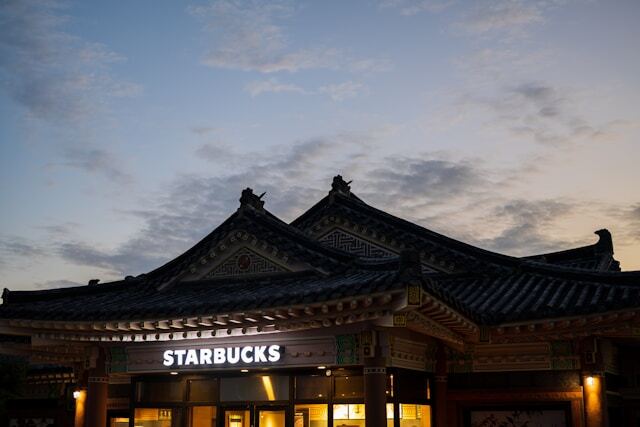
What happened at Starbucks Korea
In mid-April, Starbucks Korea's e-commerce division signed off a flash promotion on a line of oversized stainless steel tumblers called SS Tank. The name decided upon was 'Tank Day'. The date for launch was set. May 18.
May 18 falls on the anniversary of the Gwangju Uprising. In 1980, the military government of Chun Doo-hwan sent troops and tanks into Gwangju to suppress a pro-democracy protest. Official records list 165 civilians killed, 65 missing, and a further 376 who later died of their injuries. Many believe the true toll was higher. It set South Korea on its path to democracy and is commemorated nationally every year.
The campaign copy carried a second phrase: "책상에 탁", translated variously as "slam on the desk" or "thwack it on the table". The intended meaning was the sound of a tumbler being set down. To the Korean audience it pointed to something else entirely: to 1987, and the police account of the death of student activist Park Jong-chol, who they claimed had simply collapsed after an interrogator struck the desk with a "tak". He had been tortured to death.
So a tumbler promotion had opened two of the country's rawest wounds from the authoritarian era. One through a date and a product name. The other through a slogan.
The campaign launched on the morning of the anniversary and was withdrawn within hours. Chief executive Son Jung-hyun was dismissed, public apologies were made including a nationally televised apology from the chairman of Shinsegae, the Korean retail group that owns and operates Starbucks Korea, and Shinsegae confirmed a "very significant" drop in sales.
Nobody asked the question
Most people's first assumption was that it was deliberate. Two references, both seemingly pointing at the same event, on that particular date.
Shinsegae's investigation turned up no evidence of intent, though it couldn't rule it out either. What it did find was arguably not much better.
The team told investigators they chose May 18 for commercial reasons: weekday online sales outperform weekends. The proposal then passed through four levels of approval, up to and including the chief executive. Shinsegae's executive summary of what happened next was that "priority was given to the speed and immediacy" of the campaign, and that "not a single objection was raised during either the planning or approval stages".
Volume acts as a contributor also. Starbucks Korea ran 222 promotions last year, roughly one every two days. At that cadence, there was no time for questions of cultural meaning to surface.
So this wasn't a one time miscalculated error. It was a system working exactly as designed, with cultural meaning having no place within it.
Every approval process checks what exists on the checklist:
Does the stock exist?
Does the margin work?
Does the date fall in a good sales window?
What checklists so often fail to cover is cultural meaning and interpretation.
This is where cultural intelligence (CQ) comes in. Cultural intelligence (CQ) is the ability to navigate and bridge cultural differences. It begins with the awareness that our own frame of reference is a frame, and is not simply the way things are.
I could believe my marketing campaign to be more than culturally appropriate: direct, personable, witty even. But CQ allows me to see that my reading is a reading, not the default. That takes awareness. It also takes the right attitude, because nobody goes looking for a second opinion they've decided isn't there.
That's what was missing on the SS Tank launch. Awareness would have flagged that the copy and the timing carried a second meaning. The right attitude would have meant somebody checked.
But is cultural intelligence really the solution?
Somebody could reasonably push back on me here. Cultural intelligence is a capability for working across cultural difference. But Starbucks Korea's campaign was built by Korean teams, in Korean, for Korean customers. So the subject matter was cultural, certainly, but the failure looks domestic. A team that didn't know its own calendar. Isn't that a knowledge gap rather than a CQ gap?
That take rests on an assumption many of us carry: that culture is something a country has uniformly, and that difference is what happens where one country meets another. But a shared nationality doesn't protect you from cultural missteps. Actually, it can make it more likely. We often treat "shares a culture" and "shares a country" as the same fact, and assume that everyone in the room is reading from the same page. What counts as appropriate, then, never gets examined, because it appears to be already agreed.
But the deeper assumption isn't about borders at all. It's about which decisions culture belongs to. Picking a launch date, naming a product, writing a line of promotional copy: these read as commercial decisions, the kind you check against inventory and margin. Culture is what you think about when you're entering a new market, translating a campaign, or dealing with a country other than your own. Something foreign, or something obviously sensitive.
That's what went wrong here. Not a difference somebody failed to bridge, but a whole category of decision that culture was never thought to touch.
Enter AI
There's a reason the discussion of cultural meaning in marketing matters more now than it did even a mere five years ago. And yes, I'm talking about Artificial Intelligence (AI).
Asked how the copy came about, employees told investigators they had used a generative AI tool. Korean marketing copy often leans on short sound words, and the existing line for the tumbler range was "가방에 쏙", roughly translating to "straight in the bag". They asked AI for more similar phrases: "책상에 탁" was among what came back. They said it hadn't occurred to them the phrasing might be a problem.
The convenient explanation blames the tool. But look at what AI was actually asked to do. It was asked to produce a rhyming phrase, and it produced a competent one. Nobody asked it to evaluate, or even consider the cultural interpretation of the phrase.
Notice which decisions were never AI's to make, though. A human chose the date. A human chose the product name. The issue was seeded far before AI's contribution.
What AI did remove, though, is the pause. AI doesn't hesitate, it doesn't caveat, and unless asked, it won't tell you what it isn't sure about. A colleague handed the same brief might have stopped, offered an alternative, or at least opened the question to the room.
But notice what the employees said in their defence. They said they asked AI. They said they never thought about May 18. Both are true, and the second pre-dated the first.
So where should CQ sit?
Starbucks Korea's response was more training and a new social sensitivity checklist. Arguably, the response was more than many companies manage, and yet the response is still downstream from the key issue.
In Country Navigator's framework, cultural intelligence has four components: knowledge, awareness and attitude, with skill as what the other three get applied through.
On Tank Day, all three were in play, to varying degrees.
The problem was that picking a launch date wasn't a cultural decision to them. It was an inventory and revenue decision. Culture belonged elsewhere, not to a weekday promotion on a tumbler line.
That's the gap: not between what they knew and what they didn't, but between where they thought culture lived and where it actually does. Awareness and attitude work together to close it. Awareness that cultural interpretation patterns marketing the way it patterns everything else, and attitude to care enough to actually do something about it.
Which is why more training and a new checklist won't suffice. Both address the one component the team were best equipped with, knowledge, and leave untouched the two that would have made the difference.
CQ wouldn't have guaranteed this situation didn't occur. What CQ changes, though, is whether questions of cultural meaning get asked by default or only investigated in hindsight.
The question that isn't in the checklist
Culture is present in every message, in every market, including the ones you've worked in for years and the audience you'd have sworn you understood. Especially those. Confidence is the condition under which nobody thinks to look.
Somewhere in your organization this week, a campaign is being approved on schedule. Every box on the checklist has an owner.
But who's holding the question of culture, the one that isn't on the checklist?
Sources: Shinsegae Group internal investigation findings, press conference, May 26, 2026 | "Starbucks Korea crisis blamed on historical ignorance, approval chain failure", The Korea Times, May 26, 2026 | "Was the Starbucks Korea 'Tank Day' fiasco caused by AI?", The Korea Times, June 4, 2026 | AFP, May 26, 2026 | The Korea Herald and The Investor, May 2026 | Korea JoongAng Daily, June 15, 2026 | NBC News, May 27, 2026 | Fortune, June 15, 2026 | The Japan Times, June 17, 2026 | Biz Hankook, May 19, 2026 | CNN, August 5, 2026 | Country Navigator cultural intelligence framework | What is cultural intelligence?


.svg)







COMMENTS